

Electrification With Clean Power Is Key For Industrial Sector
U.S. manufacturing can continue its growth while cutting carbon emissions, if policymakers and utility regulators help industry electrify process heating, according to ACEEE.

Keep It “Business As Usual” During Renovations
Using new barrier technologies, planning, and some creative ingenuity, you can safely keep your facility open during renovation projects.

Elevate Commercial Roofing Opens Green Manufacturing Facility In Utah
Built with Elevate and Holcim materials, the manufacturer’s new LEED-certified manufacturing and distribution center in Salt Lake City will expand service to customers in the West.

How Facility Executives Can Impact Business Continuity Planning
Why facility executives and leaders have to be actively involved in business continuity planning and training.


Worried About Workforce Shortages? Effective Strategies To Stay Ahead
During this free webinar, you'll learn the top 5 strategies that facility maintenance pros are implementing to overcome workforce shortages.
View This Free Video Webinar: Maximizing Value For Facility Master Planning
A panel of Facility Management leaders discuss long-term planning challenges and answer questions about maximizing the value of conducting a Facility Condition Assessments (FCA).

Did You Miss Our “Building Analytics, Skilled Labor Shortages & Decarbonization” Webinar?
View this free video webinar to learn how fault detection and diagnostics (FDD) has become a critical part of the resilient facility team’s tech stack.

Worried About Workforce Shortages? Effective Strategies To Stay Ahead
During this free webinar, you'll learn the top 5 strategies that facility maintenance pros are implementing to overcome workforce shortages.

View This Free Video Webinar: Maximizing Value For Facility Master Planning
A panel of Facility Management leaders discuss long-term planning challenges and answer questions about maximizing the value of conducting a Facility Condition Assessments (FCA).

Special Issue: Harnessing The Power Of Data
Data-driven facilities are embracing AI and other technologies to set up for future success.

Legrand’s Smart Charging Solutions: Revolutionizing Electric Mobility
Designed for facility owners and fleet managers, the Legrand EV Charger allows for remote monitoring, user authentication, and data analysis.

Legacy Phone Lines Are Draining Your Profits
Copper wire phone lines supporting emergency devices are being phased out while draining your profits. How will you stop the leak?

When Shifting Priorities Shake Up Your Capital Plan
How easily can you modify your capital plan to accommodate changing priorities or emergencies?

Old-Fashioned Practices Holding You Back From Truly Great Capital Planning
Tired of the same old painful budgeting process? Take control of your facilities data and watch your capital planning challenges disappear.

[VIDEO] Collect Asset Data at the Speed of Walking a Building
AI powered data collection with AkitaBox Capture. Take a picture of the asset nameplate, touch the floor plan to locate the asset and move to the next asset. Save up to 90% of your time in the field with AkitaBox Capture AI.

[VIDEO] Capital Planning Advice for Facilities
Creating a sustainable and adaptable capital plan will take a coordinated effort among decision-makers and a tactical plan of attack. Learn more.

[VIDEO] POTS Replacement for Business | Ooma AirDial at Brickpoint Properties
From schools and universities to commercial office and retail buildings, Ooma AirDial provides critical phone service to life safety phones, alarms and building entry systems.

[VIDEO] Case Study | Globalworth and Honeywell Forge for Buildings
Building owners face a dilemma – how to prioritize sustainable renewable energy while providing a people-centric environment in a cost-effective way. See how Globalworth leveraged Honeywell Forge in Romania and Poland to meet their goals.

[VIDEO] 3 Reasons You Need to Complete an FCA
Quickly get the current conditions of your facilities, so you can prioritize facilities budgets and secure necessary funding with an Facility Condition Assessment (FCA).
Products & Services
- All
- Featured Products & Services
- Access Control & EAC
- Bird Control
- Building Automation
- Carpet
- Cleaning & Maintenance
- Commercial Doors
- Commercial Doors
- Communications Equipment
- Computerized Maintenance Management Systems (CMMS)
- Construction & Roofing
- Construction Ladders & Lifts
- Corporate Signage
- Door Hardware
- Energy & Energy Technology
- Exterior Lighting
- Facility Safety
- Facility Supplies
- Fire & Life Safety
- Flooring & Decor
- Furniture & Furniture Rental
- HVAC & Indoor Air Quality (IAQ)
- Lighting Products & Controls
- Paint & Wall Coverings
- Property Services
- Restrooms & Plumbing
- Solar Projects
- Soundproofing & Acoustics
- Sustainable Solutions & Technologies
- Windows & Skylights
- Wiring & Cabling
More

Airzone Announces Aidoo Z-Wave Inverter/VRF Controller
The Aidoo Z-Wave Inverter/VRF Controller enables the optimization of climate control and energy efficiency via Z-Wave technology.

USAI Lighting Introduces LittleTwos Lighting Solution
LittleTwos Lighting Solution 2” aperture Pinholes and 2” diameter Cylinders offer high-performance design in a small but mighty package.


[VIDEO] Collect Asset Data at the Speed of Walking a Building
AI powered data collection with AkitaBox Capture. Take a picture of the asset nameplate, touch the floor plan to locate the asset and move to the next asset. Save up to 90% of your time in the field with AkitaBox Capture AI.

Facility Executive FacilityBlog
- All
- Expansions & Renovations
- New Facilities Construction
- FM Alert
- Friday Funny
- New Product Flash
- New Service Spotlights
- Question Of The Week
- Web Exclusives
- Facility Management
- Workplace Culture
- Building Envelope & Exteriors
- Construction & Retrofits
- Economic Development
- Energy Management & Lighting
- Environment
- Heating, Ventilation, and Air Conditioning (HVAC)
- Interiors
- Safety
- Security
- Technology
More

Electrification With Clean Power Is Key For Industrial Sector
U.S. manufacturing can continue its growth while cutting carbon emissions, if policymakers and utility regulators help industry electrify process heating, according to ACEEE.
FACILITY EXECUTIVE MAGAZINE
- All
- Awards
- Columnists
- Facility Retrofit Column
- HVAC Factor Column
- Professional Development Column
- Renewable Energy Column
- Retired Columnists
- Technology & FM Column
- Tricks of the Trade Column
- FM Solutions
- In-Depth Articles
- FM Issue
- Services & Maintenance
- Trends
- In-Depth Case Studies
- Recent Issues
- Special Reports
- Bonus Features
More

How Facility Executives Can Impact Business Continuity Planning
Why facility executives and leaders have to be actively involved in business continuity planning and training.

Facility Executive April 2024 Issue
The April 2024 issue explores business continuity. Plus, fire safety, managing FM teams, ADA compliance, and more.

Facility Executive February 2024 Issue
The February 2024 issue explores how to create safer, smarter and healthier workplaces. Plus, cybersecurity, climate change, and office design.

Facility Executive December 2023 Issue
The December 2023 issue explores business continuity and the next generation of facility management. Plus, stormwater management trends, LED lighting, and SOLUTIONS for 2024.
Electrification With Clean Power Is Key For Industrial Sector
U.S. manufacturing can continue its growth while cutting carbon emissions, if policymakers and utility regulators help industry electrify process heating, according to ACEEE.
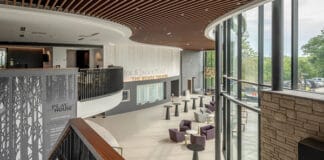
Theater Case Study: Innovation Takes Center Stage
In Cincinnati, a facility manager unwraps a new $50 million theater that includes the latest and greatest in stage technology.

Legacy Phone Lines Are Draining Your Profits
Copper wire phone lines supporting emergency devices are being phased out while draining your profits. How will you stop the leak?






Worried About Workforce Shortages? Effective Strategies To Stay Ahead
During this free webinar, you'll learn the top 5 strategies that facility maintenance pros are implementing to overcome workforce shortages.
View This Free Video Webinar: Maximizing Value For Facility Master Planning
A panel of Facility Management leaders discuss long-term planning challenges and answer questions about maximizing the value of conducting a Facility Condition Assessments (FCA).
Airzone Announces Aidoo Z-Wave Inverter/VRF Controller
The Aidoo Z-Wave Inverter/VRF Controller enables the optimization of climate control and energy efficiency via Z-Wave technology.
Electrification With Clean Power Is Key For Industrial Sector
U.S. manufacturing can continue its growth while cutting carbon emissions, if policymakers and utility regulators help industry electrify process heating, according to ACEEE.
Keep It “Business As Usual” During Renovations
Using new barrier technologies, planning, and some creative ingenuity, you can safely keep your facility open during renovation projects.
USAI Lighting Introduces LittleTwos Lighting Solution
LittleTwos Lighting Solution 2” aperture Pinholes and 2” diameter Cylinders offer high-performance design in a small but mighty package.
Elevate Commercial Roofing Opens Green Manufacturing Facility In Utah
Built with Elevate and Holcim materials, the manufacturer’s new LEED-certified manufacturing and distribution center in Salt Lake City will expand service to customers in the West.